


What Is Tørrfisk? Norway’s Ancient Arctic Food
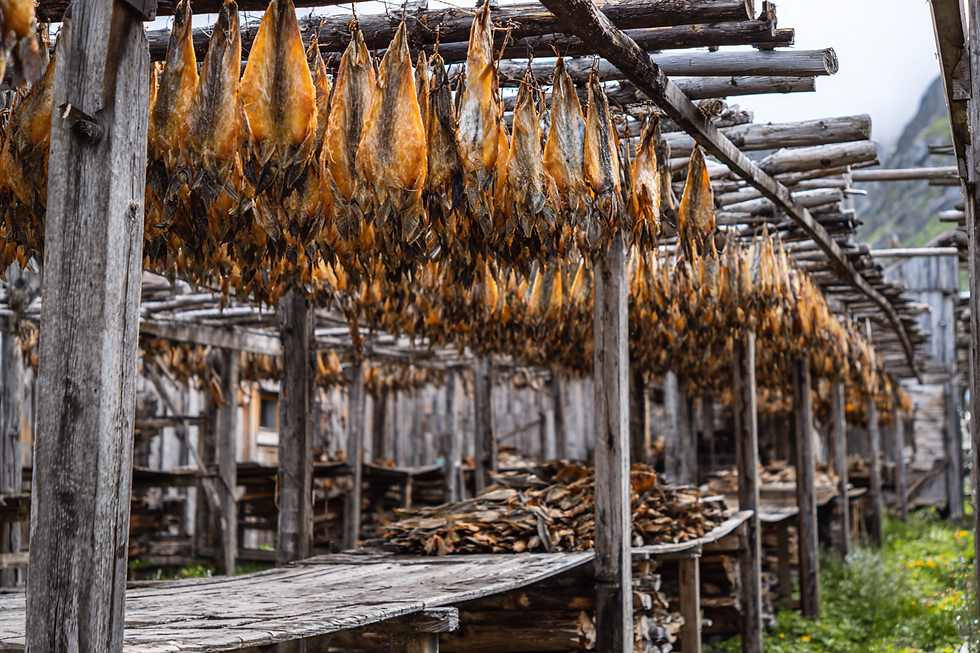
When visiting Northern Norway, you might notice whole fish hanging from wooden racks along the coast, drying naturally in the cold Arctic air. This is tørrfisk—dried cod—one of Norway’s oldest and most important food products. It’s more than just a local snack; it’s a cultural heritage, an export powerhouse, and a culinary experience you simply can’t skip when visiting Tromsø and the Lofoten region.

What Is Tørrfisk?
Tørrfisk is unsalted fish—most often Atlantic cod—that is air-dried outdoors from February to May, when the temperature hovers just above freezing. This climate is perfect for natural preservation: cold enough to prevent decay, yet not so cold that the fish freezes solid. The result is a lightweight, long-lasting product with an intense flavor and high nutritional value.
While cod is the most common fish used, haddock, saithe, and ling are also sometimes dried.
A Thousand-Year History
Drying fish in Northern Norway is not a new idea—it’s a tradition that dates back over 1,000 years. The Vikings relied on tørrfisk as a travel staple because it was lightweight, long-lasting, and protein-packed. It could be eaten as-is or soaked and cooked into stews.
From the Middle Ages onwards, tørrfisk became one of Norway’s most valuable exports, traded with the rest of Europe for goods like grain, wine, and spices. In fact, for centuries, tørrfisk was the backbone of Norway’s economy, long before oil and gas were discovered.
Today’s Tørrfisk Industry – By the Numbers
Main production area: Lofoten Islands, with some production in Vesterålen, Senja, and Tromsø region.
Export volume: Around 5,000–6,000 tonnes of tørrfisk are exported each year.
Top export markets: Italy (especially Venice and Naples), Nigeria, Croatia, and the USA.
Cultural recognition: In 2014, “Stockfish from Lofoten” received Protected Geographical Indication (PGI)status in the EU, similar to Champagne in France.
Nutritional facts: 100g of tørrfisk contains around 80–85g of protein, making it one of the most protein-rich natural foods in the world.
How Tørrfisk Is Made
Catch the Cod: Traditionally, cod for tørrfisk is caught between January and April during the famous skrei season when cod migrate to spawn in Northern Norway.
Preparation: The fish is gutted, cleaned, and tied in pairs by the tail.
Drying Racks (Hjell): The fish are hung outdoors on wooden racks, where the Arctic wind and sun slowly dry them for 2–3 months.
Maturation: After drying, the fish is matured indoors for several more months, developing its unique aroma and flavor.
How to Eat Tørrfisk
In Norway, tørrfisk can be enjoyed in several ways:
As a Snack: Simply tear off pieces and chew—like Arctic jerky.
Soaked and Cooked: In Northern Norway, rehydrated tørrfisk is often served with potatoes, carrots, and a creamy sauce.
International Recipes: Italians make baccalà mantecato (creamy stockfish spread) or baccalà alla vicentina(slow-cooked with onions, milk, and olive oil). In Nigeria, stockfish is an essential ingredient in soups and stews.
Where to Try Tørrfisk in Tromsø
Local Restaurants: Look for fish restaurants offering “stockfish” or “tørrfisk” on the menu.
Souvenir Shops: Small packs of tørrfisk make great edible souvenirs.
Local Markets: Visit Tromsø’s fish market or smaller shops for authentic dried cod straight from the racks.
Why You Should Try It
Tørrfisk is more than food—it’s a taste of Norway’s history and a living tradition that has shaped Arctic culture for centuries. Its intense flavor, chewy texture, and remarkable nutritional profile make it a fascinating experience for food lovers and history enthusiasts alike.
When you bite into a piece of tørrfisk, you’re tasting the same food that fueled Viking voyages and built centuries of trade across Europe.


